Hail Damage Repair Without Repainting: How PDR Restores Your Vehicle
A hailstorm can leave a vehicle looking rough in a matter of minutes. One hard cell moves through, and the hood, roof, trunk lid, and upper door panels end up freckled with dozens, sometimes hundreds, of small dents. For many owners, the first assumption is that the car will need body filler, sanding, primer, and a full repaint. That is not always the case.
When the paint surface is still intact, paintless dent repair, often shortened to PDR, can often reverse hail damage without disturbing the original finish. In the right situation, it is one of the cleanest forms of auto body dent repair because it corrects the metal itself rather than covering the damage with filler and new paint. That matters more than most people realize. A factory finish is usually more durable and more consistent than even a very good refinish job, and preserving it helps protect both appearance and value.
Shops that specialize in hail damage repair have relied on paintless dent removal for years, especially after seasonal storms that hit neighborhoods, dealership lots, and fleets all at once. It is not magic, and it is not right for every dent. Still, when the damage fits the method, PDR dent repair can save time, reduce material use, and help owners avoid the drawbacks of traditional body work.
What paintless dent repair actually does
At its core, paintless dent repair is metal shaping. A trained technician uses specialized rods, picks, body tabs, glue-pulling tools, lights, and reflection boards to read the contour of a panel and slowly massage the metal back into place. The process depends on control, patience, and access. A technician is not just pushing randomly behind a dent. They are reading tiny highs and lows in the panel and correcting them a fraction at a time.
That is why PDR works so well on hail dent repair. Most hail dents are shallow, rounded impressions rather than sharp creases. If the impact did not crack the paint and the metal has not been stretched too far, the panel can often be restored with little to no visible evidence of damage.
This is also why people searching for dent repair near me often get different answers from different shops. A general auto body shop may offer PDR as one service among many, while a dedicated paintless dent repair team may have more experience with large hail events and heavily dimpled panels. Skill level matters. A small door ding repair on a flat panel is one thing. A roof covered in seventy dents with braces, wiring, airbags, and tight access points underneath is another.
Why preserving factory paint matters
Owners often hear that PDR helps keep original factory paint, but that phrase deserves a little context. Factory paint is baked on under controlled conditions at the manufacturer. The chemistry, curing process, and consistency are difficult to duplicate outside the factory. A high-end auto body repair facility can absolutely produce strong, attractive refinishing work, but it still involves sanding the original finish away, applying new coatings, blending neighboring panels in some cases, and waiting for that refinish to fully cure.
When hail damage repair can be completed without repainting, the benefits are practical, not just cosmetic. Original paint tends to hold up well over time, especially against fading and weathering. It also avoids issues that can come with color matching, edge mapping, tape lines, and future differences in gloss or texture. On newer vehicles, preserving original finish can support resale value because buyers and appraisers often prefer panels that have never been repainted.
There is also the reporting side of things. A repainted panel is not automatically a problem, but it can prompt questions during resale or trade-in. If a vehicle can undergo car dent repair and return to shape without body filler or refinish work, that is usually the cleaner outcome.
Why hail damage is such a strong fit for PDR
Hail damage repair and paintless dent repair are linked for a reason. Most hailstones strike from above and affect broad horizontal surfaces first, especially the hood, roof, and trunk. Those panels often have many small dents rather than a few severe ones. That pattern makes the vehicle look dramatically worse while still leaving room for non-invasive repair.
A technician evaluating hail damage is looking at more than dent count. Size matters, but so do depth, location, panel material, curvature, and access. Aluminum hoods and roofs can be repaired with PDR, though they behave differently than steel and require a practiced hand. Edges and body lines are more difficult than open flat areas. A dent on a roof rail can be much more challenging than one in the center of a hood. If hail hit hard enough to chip paint or distort a panel sharply, traditional repair may still be needed.
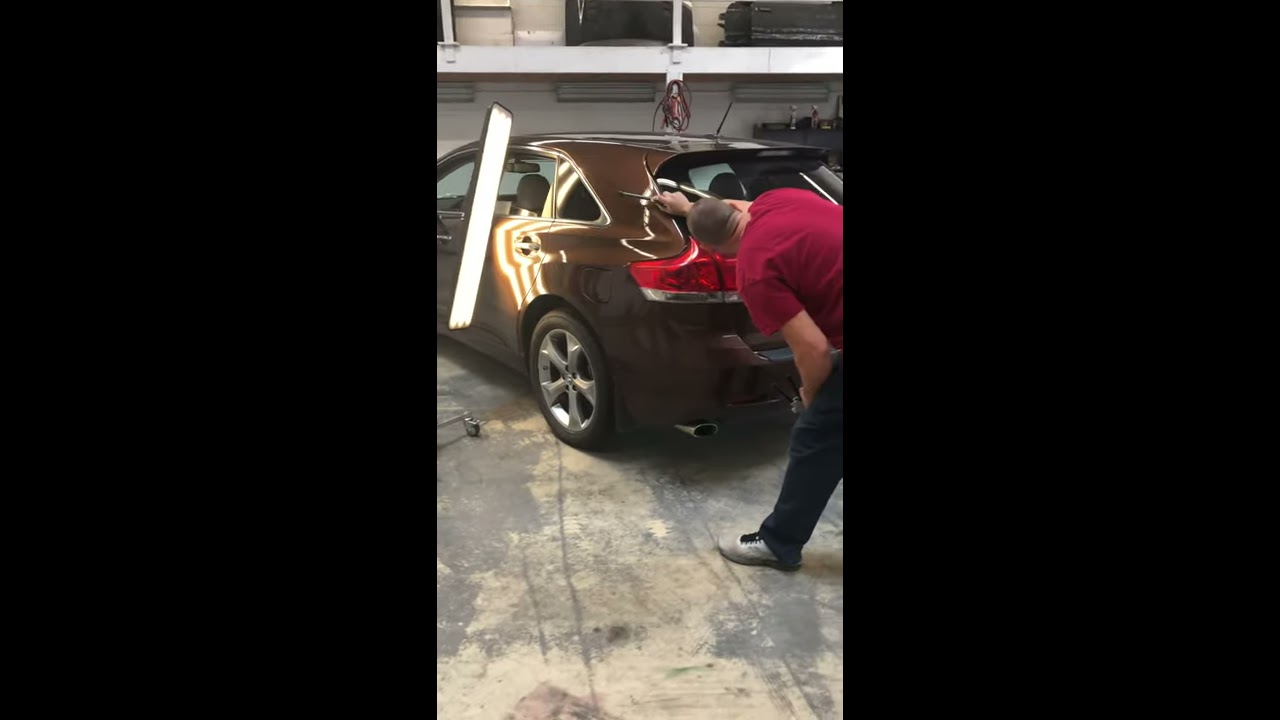
I have seen cars come in after a storm looking totaled to the owner, only to be restored through PDR because the metal was still workable and the paint had survived. I have also seen the opposite, where a vehicle had fewer dents than expected but several were so sharp, or located so close to reinforced areas, that paintless dent removal was no longer the best choice. Good judgment starts with a proper inspection under dedicated PDR lighting, not a quick glance in the parking lot.
How the repair process usually unfolds
Most customers first notice the damage in angled sunlight or under garage lighting. The car may look almost normal straight on, then suddenly the hood reveals a field of dimples. Once the vehicle is in the shop, the technician maps the affected panels and determines whether PDR, conventional body work, or a combination of both makes the most sense.
On many hail jobs, trim pieces, headliners, tail lamps, hood liners, or inner panel access points need to be removed so the technician can reach the backside of the metal. This surprises some owners. Paintless dent repair is less invasive than sanding and repainting, but it is still precise labor. A roof repair, for example, may require lowering the headliner to gain access while protecting airbags, wiring, and interior surfaces.
From there, the dents are worked individually. That can mean pushing from behind with rods or pulling from the outside with glue tabs where backside access is limited. Each dent has to be brought back gradually. Push too hard, and you create a high spot. Move too fast, and you risk distorting the panel or stressing the finish. The final stages often involve blending, which softens tiny pressure points and restores the natural orange peel texture of the panel so the repair disappears in reflected light rather than just looking better at a glance.
For a small minor dent repair, same day dent repair is common. A single ding on a fender or a typical door ding repair might be handled in an hour or two. Hail work is different. A heavily hit vehicle can require several days, sometimes longer, depending on dent volume, parts removal, insurance approval timing, and whether multiple panels need advanced access.
When PDR is the better choice than traditional body work
The conversation around PDR vs traditional body work gets oversimplified. It is not that one method is modern and the other is outdated. They solve different problems.
PDR is usually the preferred route when the paint is intact, the dent is shallow enough to reshape, and the panel can be accessed or safely glue-pulled. Traditional repair becomes necessary when paint is cracked, metal is sharply stretched, a panel is torn, or the impact has damaged plastic parts or underlying structure. Hail can also affect trim, moldings, windshields, mirror caps, and plastic bumper covers, and those parts may need a different repair path.
A common mixed repair involves a vehicle with hail dents on the hood and roof that qualify for paintless dent repair, plus a chipped edge on a fender or damaged molding that needs conventional auto body repair. Good shops do not force everything into one method. They use the right approach panel by panel.
That distinction matters when a customer starts comparing estimates online. A low price on car dent repair may reflect a basic count on visible dents only. A higher estimate may include trim removal, roof access, aluminum work, and detailed finishing. Those are not apples-to-apples comparisons. The same is true when comparing a PDR specialist with a collision repair center that primarily handles heavier accident damage. Both can be competent, but the workflow, tooling, and technician background can differ quite a bit.
The kinds of dents that do and do not respond well
The best candidates for paintless dent removal usually share a few traits. The finish is not broken, the impact is not knife-sharp, and the panel has enough flexibility left to return to shape. Hail damage often checks those boxes. Door ding repair often does too, provided the dent is not on a very tight Tony's Collision Center edge.

Some limitations are worth understanding before you book an appointment. Plastic bumper covers generally do not respond to PDR the same way metal panels do, so a bumper dent repair may require heat reshaping, conventional repair, replacement, or a mix of techniques depending on the damage. Sharp creases through body lines can sometimes be improved with PDR, but not always made invisible. Older repaint work is another factor. If a panel has been refinished before, glue-pulling can risk lifting non-factory paint, and even backside pressure can stress a weaker finish.
This is where experience shows. A seasoned technician will not promise the same result on every dent. They will explain whether the goal is complete restoration, strong cosmetic improvement, or a different repair altogether. That honesty saves frustration later.
What the visit to the shop should feel like
A quality inspection is usually calm, specific, and visual. The estimator or technician should walk the vehicle under proper lighting, point out what they see, discuss likely access needs, and explain whether the work can be handled as mobile dent repair or should stay in-shop. For simple car dent repair, mobile service can be convenient. For hail damage repair, in-shop work is usually more practical because of the lighting, panel access, interior protection, and volume of dents involved.
There are a few useful questions to ask before authorizing the job:
- Is the paint intact on every affected panel?
- Will trim or the headliner need to be removed?
- Is the estimate based on dent count, panel size, or both?
- If some dents cannot be fully corrected with PDR, how will that be handled?
- Have any panels been repainted before?
That short conversation often reveals whether you are dealing with a true PDR process or a vague promise to “make it look better.”
Paintless dent repair cost and what drives the price
Paintless dent repair cost varies widely because the labor is based on dent complexity rather than just panel replacement. For a single small ding, the price might be modest. Once hail damage enters the picture, the estimate usually depends on dent count per panel, dent size, panel material, ease of access, and whether the work involves large horizontal surfaces like the roof.
There is no single universal dent removal cost because regional labor rates and shop specialization vary. As a rough real-world pattern, a straightforward minor dent repair might cost far less than a full conventional refinish, while a severe hail job with dozens of dents across multiple panels can add up significantly because each impression still requires individual correction. Even then, PDR often remains cost-effective compared with traditional body work because it avoids filler, primer, paint materials, and blending adjacent panels.
Customers are sometimes confused when one dent on a roof costs more than one dent on a door. Access is usually the reason. A simple door ding repair may allow direct tool access through a window opening or service hole. A roof dent may require lowering the headliner, protecting electronics, and working around structural reinforcements.
If you are comparing quotes, ask how complete the restoration is expected to be. A bargain estimate that does not account for difficult dents, cleanup work, or proper finishing can auto body shop San Francisco look attractive at first and disappointing later.
Insurance, hail claims, and what owners should expect
For many drivers, the first practical question is not technical but financial: does insurance cover paintless dent repair? In many cases, if you carry comprehensive coverage, hail damage repair is covered, subject to your deductible and policy terms. The specifics depend on your insurer, your coverage, and the nature of the claim, so the safest advice is to review the policy and speak with your carrier.
A car hail damage insurance claim often starts with photos and an inspection. Some insurers use digital estimating tools, field adjusters, or approved shop networks. Others let you choose your repair facility and then reconcile the estimate. It helps to know that a preliminary estimate is not always the final word. Once the vehicle is in the shop and panels are inspected under proper lights, supplement requests are common, especially if the true dent count is higher than what appeared outdoors.
Owners often worry that choosing PDR somehow weakens the claim because it sounds less intensive than conventional body work. In practice, insurers frequently prefer paintless dent repair when it is appropriate because it restores the vehicle effectively while reducing materials and refinish costs. If the car can be returned to condition without repainting, that is usually considered a sound repair path, not a compromise.
Another concern is timing. After a regional hail event, backlogs form quickly. Auto body shop calendars fill, mobile crews get overwhelmed, and claim volume slows communication. If the glass is intact and the car is drivable, it is still wise to start the claim early and schedule an inspection before demand spikes further.
Why same-day service is possible sometimes, and unrealistic other times
Same day dent repair is real for the right job. A single parking lot ding, a soft dent on a fender, or a small crease caught early can often be corrected quickly. Hail damage is rarely that simple. Even a vehicle that looks only moderately affected can have dozens of dents under proper lights.
The number of dents is only part of the issue. Large hail jobs involve setup, panel mapping, disassembly, repair sequencing, reassembly, quality control, and often insurer communication. A customer may hear that the hood and decklid are easy enough but the roof will take much longer because access is restricted. That does not mean the shop is dragging its feet. It means the repair is being done correctly.
A realistic shop will tell you when same-day service is possible and when it is not. That honesty is worth more than a rushed promise.
Mobile dent repair has its place, but hail work usually belongs indoors
Mobile dent repair is excellent for convenience when the damage is limited and conditions are controlled. A skilled technician can fix a door ding in your driveway or office lot if the lighting, weather, and access cooperate. That model works well for isolated dings and some minor dent repair.
Hail damage is another category. Accurate hail dent repair depends heavily on stable lighting, reflected lines, clean panel visibility, and often partial disassembly. Wind, changing sunlight, dust, and cramped parking conditions can all reduce consistency. For that reason, most serious hail work is better handled in a shop. The result is usually stronger, and the process is safer for the vehicle.
Not every “dent” issue is a PDR issue
Drivers sometimes lump everything together under dent repair, but dents, scratches, creases, and collision damage do not share the same solution. Scratch and dent repair can involve both cosmetic and structural considerations. If the paint is broken, the conversation changes immediately. PDR corrects metal shape, not paint loss. If hail left chips through the clear coat or down to bare metal, some level of refinishing may be needed to prevent corrosion and restore appearance.
The same goes for collision repair. A low-speed impact can leave what seems like a few simple dents, yet the underlying brackets, sensors, or mounting points may be affected. A reputable shop should separate cosmetic issues from true collision-related damage rather than treating them as interchangeable.

Choosing the right shop matters more than the marketing
You do not need the flashiest website or the biggest promise. You need competence, proper lighting, clean workmanship, and clear communication. Some of the best PDR technicians work in quiet shops with little fanfare because most of their business comes from referrals, dealer relationships, and storm-season volume.
When evaluating an auto body shop for hail dent repair, look for evidence that they understand panel access, insurance coordination, and finish preservation. Before-and-after photos can help, though they are not a substitute for an informed inspection. A shop that mainly sells collision repair may still have an excellent in-house PDR technician, or they may outsource that portion. There is nothing inherently wrong with either setup, but it is fair to ask who is actually performing the work.
One practical sign of professionalism is how carefully they talk about expectations. Good technicians know that visibility under harsh lights is the true test, not whether the panel looks decent from six feet away. If someone guarantees perfection on every panel before they have even inspected the car properly, take that as a warning.
The real advantage of PDR after hail
The strongest case for paintless dent repair is simple. When hail damages the metal but leaves the finish intact, PDR gives you a path back to a clean-looking vehicle without the collateral effects of sanding and repainting. It respects the original panel, preserves factory finish when possible, and often shortens the repair cycle compared with conventional body work.
That does not make it automatic. The best outcomes come from honest evaluation, careful technician work, and a repair plan tailored to the actual damage. Sometimes that means full paintless dent removal across every affected panel. Sometimes it means a hybrid approach that combines PDR with selective auto body repair. Either way, the goal is the same: restore the vehicle properly, not just quickly.
If your car has been caught in a storm, a proper inspection is the next move. Under the right hands, hail damage that looks overwhelming in the driveway can often be reversed with surprising precision, and without sacrificing the finish your vehicle left the factory with.
Corrections
Spot something wrong? Send it to the desk and it gets fixed in the open.